
The World Health Organization reports that environmental conditions contribute to a significant portion of preventable diseases worldwide, especially in densely populated urban settings where people share housing, transportation, and community spaces. As cities continue to grow, students increasingly live, study, and socialize in environments where health risks can spread through daily routines and close contact.
Urban health education has become more relevant as schools prepare students for real-world living situations. Shared apartments, dormitories, boarding houses, and residential complexes create opportunities for social interaction, but they also expose people to hygiene challenges that are often misunderstood. Discussions surrounding housing maintenance and sanitation frequently reference resources such as professional extermination services as examples of how communities respond to environmental health concerns. Understanding why these services exist can help students connect classroom lessons to practical experiences.
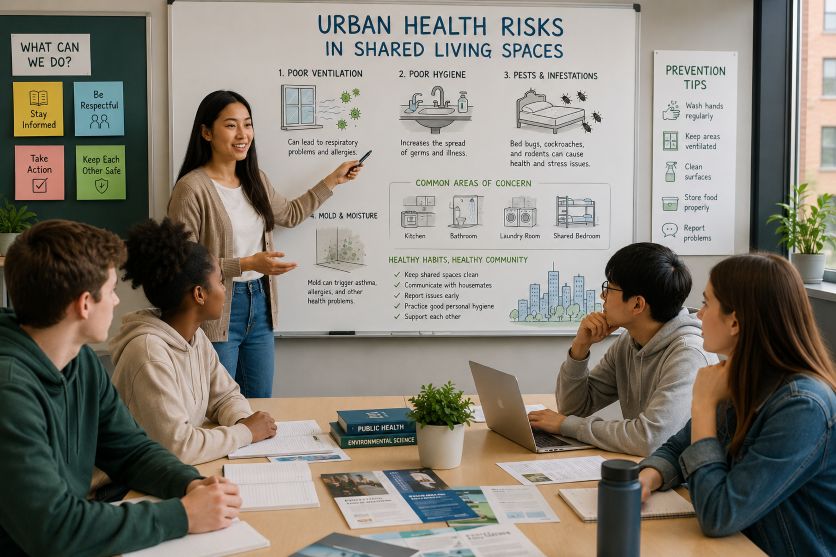
Why Urban Hygiene Education Matters
Teaching students about urban health risks goes beyond discussing germs or cleaning routines. It helps them understand how environments influence well-being and behavior. Research published by the Centers for Disease Control and Prevention (CDC) shows that crowded conditions can increase exposure to respiratory illnesses and other health concerns when hygiene practices are limited.
Students often view health as a personal issue rather than a shared responsibility. Yet many urban risks develop because of collective habits. A sink left unclean, food stored improperly, or poor ventilation in a common room can affect everyone sharing the same space.
Education creates awareness before problems occur. Instead of waiting for students to encounter issues in college dormitories or rental housing, schools can introduce these concepts earlier. The goal is practical understanding rather than fear.
Problem awareness forms the first part of the bridge. Solutions become easier once students recognize how environments influence daily health decisions.
Common Misconceptions Among Students
Step one in the problem solution process involves identifying beliefs that create confusion. Students frequently develop assumptions through social media, personal experiences, or stories from friends.
Misconception 1: Clean-looking spaces are always healthy spaces
A room may appear organized while still containing unseen concerns. Mold growth behind furniture, poor air circulation, dust accumulation, or hidden pest activity may exist even in visually neat environments.
Data from the United States Environmental Protection Agency (EPA) indicates that indoor air pollutants can sometimes be more concentrated indoors than outdoors. Appearance alone does not reveal everything.
Misconception 2: Health risks only happen in neglected areas
Students may assume that environmental concerns appear only in severely damaged buildings or poorly maintained communities. Real situations are often more complex.
Bed bugs, respiratory irritants, and infectious illnesses can occur in many types of housing environments regardless of income level or location. Exposure frequently depends on movement of people, belongings, and daily interactions.
Misconception 3: Personal habits are the only factor
Individual hygiene matters, but shared environments involve many variables outside personal control. Building maintenance, shared facilities, and behavior of others also contribute.
Helping students recognize these misconceptions creates a stronger foundation for meaningful discussion.
Classroom Discussion Ideas
Step two focuses on turning information into active learning. Students often understand concepts more effectively when they participate rather than simply listen.
Activity 1: Shared Space Observation Exercise
Ask students to imagine a common living area containing:
- Shared bathrooms
- Community kitchens
- Study rooms
- Laundry areas
- Sleeping spaces
Have students identify possible health concerns in each area and discuss preventive actions.
This activity encourages critical thinking while connecting lessons to realistic situations.
Activity 2: Myth Versus Fact Discussion
Create statements and ask students whether they are true or false.
- Air quality only matters outdoors
- Pests appear only in dirty homes
- Sharing personal items creates no risk
- Ventilation affects health
Experts from the National Institute of Environmental Health Sciences note that environmental conditions influence respiratory health, allergies, and exposure risks. Students can compare assumptions with evidence.
Activity 3: Decision-Making Scenarios
Present situations requiring practical responses.
For example:
“Your dorm room develops a strange smell and several residents begin coughing. What actions should be taken?”
Students can discuss reporting procedures, cleaning approaches, and communication strategies.
Exercises like these shift attention from memorization toward problem solving.
Real-World Case Studies
Step three builds the bridge from classroom discussion to practical understanding.
Case Study 1: College Housing Respiratory Concerns
Universities have occasionally reported increased respiratory symptoms linked to ventilation problems in student housing. Investigations often identify issues involving moisture, air circulation, or maintenance gaps.
Research from the American College Health Association highlights how residential environments can affect student health and academic performance.
Students examining this scenario can discuss early warning signs and preventive measures.
Case Study 2: Shared Furniture and Pest Awareness
Many students moving into apartments rely on secondhand furniture or shared belongings. While this can reduce costs, it also creates opportunities for accidental transfer of pests.
Environmental health professionals frequently recommend inspection practices and awareness programs in residential communities.
Classroom discussions can focus on responsible decision-making rather than creating unnecessary concern.
Case Study 3: Community Hygiene During Public Health Events
The COVID-19 pandemic demonstrated how personal actions affect larger communities. Shared spaces such as classrooms, dormitories, and public transportation became examples of how behaviors influence collective outcomes.
The World Health Organization and CDC both emphasized hand hygiene, ventilation improvements, and community cooperation as important factors during public health responses. Schools and educators have also continued exploring broader approaches to teaching cleanliness in learning environments, helping students understand how daily habits contribute to safer and healthier shared spaces.
Students can reflect on lessons learned and consider how similar principles apply to future challenges.
Conclusion
Urban health education works best when students understand the connection between everyday environments and long-term well-being. Shared living spaces create valuable opportunities for learning, collaboration, and independence, yet they also introduce practical challenges that require awareness.
The problem solution bridge begins with recognizing misconceptions, continues through discussion and observation, and ends with practical action. Teaching students how housing environments, sanitation practices, indoor conditions, and community behavior affect health prepares them for future living situations.
Knowledge alone does not change habits. Real understanding develops when students learn how to identify concerns, ask questions, and make informed choices in the environments they share with others.
As urban populations continue growing, environmental awareness and responsible hygiene practices may become important life skills that extend far beyond the classroom.