Could Online Tutoring Help Close the Gaps That Traditional Classrooms Cannot Always Reach?
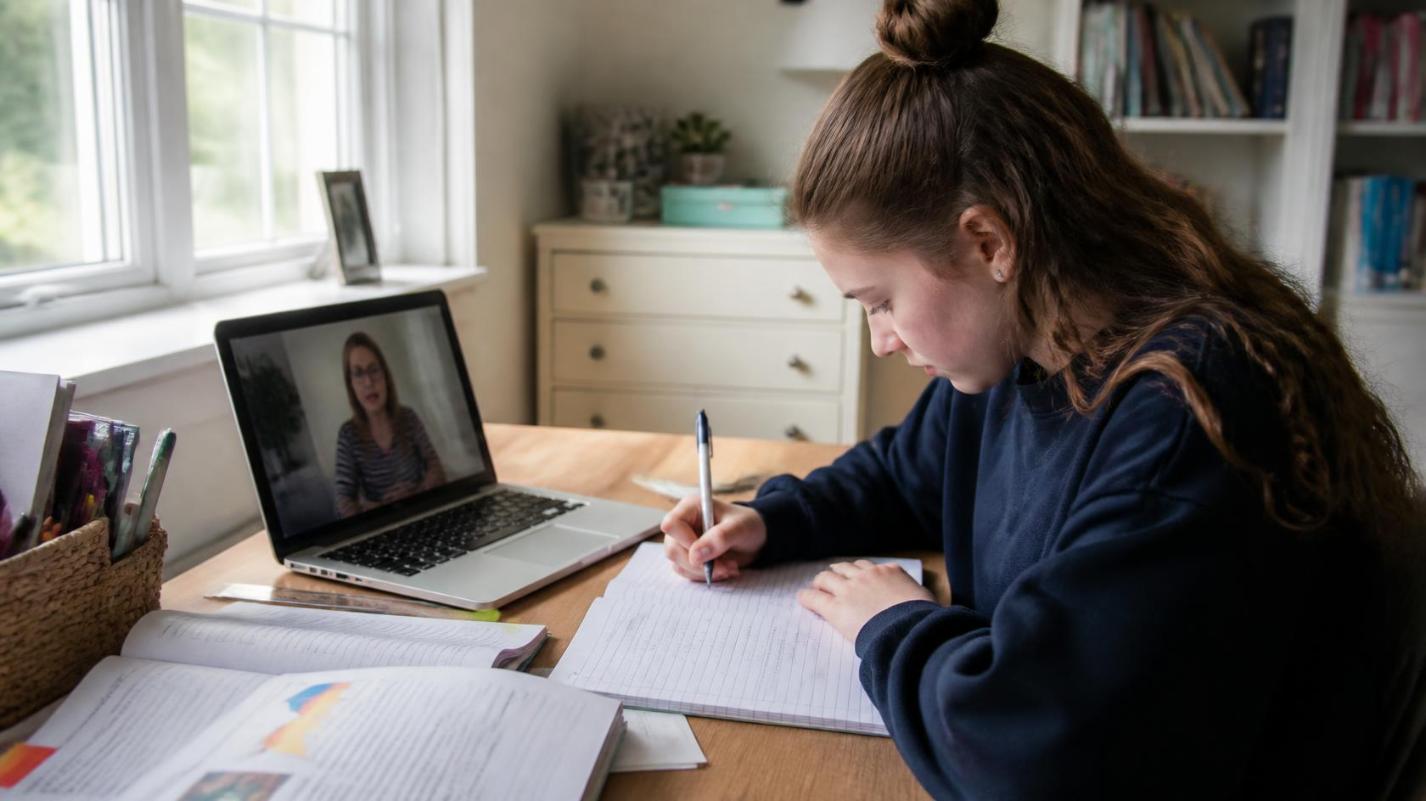
For many students, learning does not stop when the school bell rings. Some need more time to understand a difficult topic, while others may know the material but need to hear it explained in a different way before it finally makes sense.
Online tutoring can provide that extra layer of support, particularly for learners preparing for demanding examinations or trying to work through subjects at their own pace.
That does not mean tutoring should replace the classroom. Schools remain central to education, offering structured teaching, social interaction, assessment and access to a broad curriculum. The challenge is that classrooms have practical limits.
A teacher may have dozens of students to support, a fixed timetable to follow and a curriculum that has to keep moving even when several pupils need additional help.
Individualised learning can help fill that space.
The Classroom Cannot Always Move at Every Student’s Pace
One of the most persistent challenges in education is simply pace.
A lesson has to move forward. If a class spends too much time on one algebraic concept, reading exercise or scientific principle, there may be less time for the rest of the syllabus. Teachers can provide extra explanations and encouragement, but there are only so many hours in a school day.
Students, meanwhile, do not learn at identical speeds.
One pupil might grasp fractions almost immediately, while another needs several examples before becoming comfortable with them. A student preparing for an examination might understand most of a subject but repeatedly struggle with one particular type of question.
Another learner may need to revisit knowledge from earlier years before they can confidently tackle more advanced material.
One-to-one tutoring gives those differences more room.
Instead of expecting every learner to follow exactly the same route, a tutor can concentrate on the areas where additional support is most useful. That can make study sessions more focused and productive rather than simply adding more hours of revision.
Personalised Support Can Change the Learning Experience
Education is not only about delivering information. It is also about finding a way of explaining that information so a particular student can understand it.
A good tutor can slow down when necessary, revisit a difficult concept and try another approach when the first explanation fails to connect. That flexibility matters because academic confusion can build over time.
Missing one foundational idea can make the next lesson harder, which can then make the lesson after that even more difficult.
Targeted support can break that pattern before it becomes a much larger problem.
This can be particularly useful during examination preparation. UK students may be working toward GCSEs, A-Levels, entrance examinations or other assessments in which familiarity with the specific requirements of an examination can make a difference.
NearMeTutor, for example, focuses on matching students with tutors according to subject, level and exam board rather than treating every academic subject as if it were identical.
That distinction is worth considering. Mathematics is still mathematics, but the experience of preparing for a particular examination specification can involve different topics, question styles and assessment expectations.
A tutor familiar with the relevant course can help make revision more targeted. Instead of spending another hour covering material the student already understands, the session can focus on the areas that are more likely to need attention.
Flexible Learning Can Reach Students Outside the School Routine
Location and scheduling can create another barrier to additional education.
Traditional private tutoring may require families to travel, find a suitable physical location or coordinate several schedules around school, work and other commitments. Remote lessons remove some of those practical obstacles.
A student can study from home while connecting with a tutor elsewhere in the country. For families with busy routines, that flexibility may make it easier to maintain regular academic support rather than treating tutoring as something that is only possible when schedules happen to align.
Online learning also expands the potential pool of tutors.
The strongest academic match for a student may not live nearby. A tutor with the right subject expertise, examination experience or teaching approach could be located many miles away. Digital lessons make that distance less important.
Of course, remote learning will not suit everyone. Some students benefit from face-to-face interaction, while others feel more comfortable and focused in a digital environment. The important advantage is having a choice.
Families can consider different formats and decide which arrangement works best for a particular learner.
Closing Gaps Does Not Always Mean Starting From Scratch
Academic support is sometimes viewed as something intended only for students who are significantly behind. That overlooks another important role tutoring can play.
A student who is already performing well may want to strengthen their understanding, prepare for a competitive examination or work toward a higher grade. In the same way, a learner struggling with a subject may not need an entirely new curriculum.
They might simply need help with one missing concept, a more effective revision method or greater confidence when answering examination questions.
The most useful support is therefore likely to be proportionate to the student’s needs.
For one student, that could mean working through past papers. For another, it might involve practising a specific skill or revisiting a topic that was misunderstood months earlier. Someone else may benefit most from developing a structured revision plan.
The point is to make additional study purposeful.
More worksheets do not automatically lead to better learning. What matters is whether the extra work helps the student understand something more clearly or perform a task more confidently.
Safeguarding and Tutor Quality Matter
Greater access to tutoring also brings a responsibility to choose providers carefully.
Parents are not simply looking for someone who knows a particular subject. They also need confidence that a tutor is appropriately vetted, qualified and suitable for working with their child.
NearMeTutor states that tutors on its network undergo Enhanced DBS verification, qualification checks and identity verification. It also highlights safeguarding-trained tutors and recorded lessons as part of its approach.
These measures cannot guarantee that every tutoring arrangement will be successful, but they demonstrate why academic ability should not be the only consideration. Trust and safeguarding are fundamental when educational support involves children and young people.
The relationship between tutor and student matters as well. A tutor can have excellent subject knowledge and still be a poor fit if their teaching style does not suit the learner. Matching students according to their level and learning needs can help establish a more productive relationship from the outset.
Technology Can Add a New Layer to Education
The strongest argument for digital tutoring is not that technology can replace teachers. It is that technology can expand the ways students receive support.
A classroom offers structure and community. A tutor can provide individual attention. Digital platforms can make that additional instruction easier to access, even when the student and tutor are far apart.
These roles can work together.
For families, the choice does not have to be framed as school versus tutoring. It can instead be a question of identifying where a student needs another layer of guidance. A learner might attend classroom lessons during the week, practise independently at home and then use a tutoring session to work through the topics that remain difficult.
That combination can become especially useful as examinations approach. At that point, students often need to turn broad subject knowledge into the ability to answer questions accurately and efficiently under examination conditions.
A More Flexible Future for Learners
Educational gaps rarely have one simple cause. They can result from differences in learning pace, confidence, previous knowledge, subject difficulty, examination requirements or access to specialised support.
For that reason, there is unlikely to be one solution that works equally well for every learner.
Individual tutoring cannot resolve every challenge facing education, nor should it be expected to. Its value lies in providing focused support in situations where a general classroom model has less opportunity to adapt to an individual’s needs.
That same principle applies outside education. In everyday life, people often discover that more is not automatically better. Someone considering a larger home, for example, may eventually ask why purchasing a bigger house is not always a wonderful idea if the additional space brings higher costs without solving a genuine need.
The broader lesson is that the right solution is usually the one that fits the circumstances, rather than simply the one that offers more.
For students, that means tutoring should be judged by how well it addresses an actual learning need.
A learner might need help with a particular subject, preparation for a specific examination or simply more time to practise material that was covered quickly in class. Families may also benefit from the flexibility of choosing when and where that support takes place.
Most importantly, closing an educational gap does not have to mean lowering expectations. With appropriate support, additional learning can help students understand difficult material, approach examinations with greater confidence and make better use of the knowledge they already possess.
Schools will remain at the heart of education. They provide the structure, teachers, classmates and wider experiences that make learning more than a collection of lessons.
But when personalised tutoring can sit alongside classroom teaching, students gain another route toward progress. For some learners, that additional route may be the difference between continuing to struggle with a difficult subject and finally feeling that it is within reach.


 There’s something about opening an old school lunchbox that takes you straight back to childhood. The sticky plastic lid, the slightly squashed sandwich, and most importantly, the treats packed with love (or last-minute panic). For many Aussie kids, school lunches weren’t just fuel for the day. They were a ritual, a status symbol, and sometimes a low-key trading economy in the playground. And at the heart of it all were the iconic snacks we still remember today: Shapes, lamingtons, Roll-Ups, and a few questionable choices that somehow became legends—true classic treats from Oz.
 For those looking to experience these time-honored Korean wellness traditions firsthand, platforms like OPCMD serve as a trusted guide. OPCMD helps users explore a wide range of wellness venues across South Korea, including jjimjilbangs, herbal spas, and office therapy centers, commonly referred to as Opi (오피) in Korean.
 Nuru massage began in Japan centuries ago. This unique bodywork practice, rooted in ancient wellness traditions, has evolved into a modern spa therapy celebrated for its relaxing and intimate qualities. Unlike typical massages, Nuru uses a special gel derived from seaweed, creating a slippery, skin-to-skin experience. Today, it’s a popular offering in places like Thailand, where spa culture thrives. Let’s dive into its history, techniques, and the benefits that draw wellness enthusiasts to this practice.
 Healthcare education is changing fast. Spanish is now a key part of medical and nursing school programs. Why? The U.S. population is more diverse than ever. Over 40 million people speak Spanish as their primary language. For future doctors and nurses, speaking Spanish isn’t just a plus—it’s a necessity. Universities and nursing schools are responding by weaving medical Spanish into their core curricula. This shift ensures students can connect with patients, build trust, and provide better care.
 Quiet generators power homes without the roar of traditional models. These machines are engineering marvels, blending sound-dampening techniques with energy-efficient designs. For students and educators exploring STEM, understanding how quiet generators work offers a practical glimpse into sound engineering, physics, and sustainable technology. Let’s dive into the science behind these silent powerhouses and see how they connect to broader STEM concepts.
 Classroom learning often follows a rigid structure, making it difficult for students to receive the individualized attention they need. Teachers must cater to a group, leaving some students struggling while others race ahead. This is where personalized tutoring makes a difference.
 Designed specifically for the safe transportation of horses, a horse float—also called a horse trailer—is from single-horse trailers to more expansive ones that can house several horses, these floats come in a variety of sizes and configurations to meet different demands.
 One of the key aspects that often gets overlooked in schools is waste management. Whether it’s upgrading old classrooms, building a new sports hall, or just improving the school’s infrastructure, managing construction waste efficiently is crucial for maintaining a clean, safe, and environmentally friendly site. This is where Skips glasgow come in, offering a practical solution for schools undertaking renovation or building projects.